Are Retailers Really Investing More in Physical Stores?
Direct Answer
Yes. Recent retail research shows substantial continuing investment in physical stores. Retail Brew reported that 78% of retailers are making moderate or significant in-store investments in 2026, while Retail TouchPoints found that 83% of surveyed retailers said store design and experience investment had become a greater organizational priority.
Source:Retail Brew — The State of Stores ·Retail TouchPoints — Benchmark Survey
The story is not simply that retailers are opening more stores.
The more interesting shift is what retailers expect those stores to accomplish.
Retail Brew found that retailers cited:
- 62%— strengthening brand perception
- 60%— driving foot traffic
- 58%— improving customer loyalty
- 32%— only 32% cited conversion gains as a reason for store investment
Physical stores are increasingly being treated as brand-building environments — not simply transaction points.
That does not make conversion unimportant. The survey suggests retailers see strategic value in stores beyond immediate transactions — brand perception, traffic and loyalty that digital channels alone are not designed to produce.
Why Does the Physical Store Still Matter in 2026?
Direct Answer
Physical stores remain important because most shopping still involves brick-and-mortar retail, while stores provide tactile discovery, human interaction, immediate product access and experiences that digital channels cannot fully reproduce. Deloitte reports that approximately 80% of shopping still occurs in physical stores.
Source:Deloitte — Future-Proof Your Stores
Digital shopping has fundamentally changed convenience. But convenience is not the only reason people shop.
A physical environment can provide:
- product discovery
- human interaction
- social shopping
- tactile experience
- immediate gratification
- service
- community
- entertainment
- personalization
- live events
Ecommerce can make shopping faster.A store can make shopping an experience.
Does Gen Z Still Shop in Physical Stores?
Direct Answer
Yes. In an Adyen survey of more than 2,000 American consumers, 73% of 18-to-27-year-olds said they shop in physical stores at least weekly, and 57% of Gen Z respondents described physical shopping as an experience.
Source:Adyen — How Gen Z Is Reimagining Retail
That matters because Gen Z grew up with ecommerce, smartphones and frictionless digital purchasing. Yet physical shopping still holds significant appeal.
For retailers trying to reach younger consumers, the question therefore may not simply be: "How do we make purchasing easier?" It may also be: "How do we make visiting worth it?"
Experiences can add reasons to visit that do not exist inside a conventional product grid.
Are Retailers Increasing In-Store Events?
Direct Answer
Some major retailers are significantly expanding in-store event programming. Ulta Beauty planned approximately 70,000 in-store events in 2025, compared with approximately 50,000 the previous year — an increase of about 40%.
Source:Glossy — Ulta Beauty Strategies
Ulta's Chief Retail Officer said the retailer strongly believes in human connection and noted that the majority of its sales volume is generated through stores.
The scale is significant. 70,000 events in one year is not a single experiential marketing stunt. It represents the idea that in-store events can become an ongoing part of retail programming.
Experiential retail can be a program, not just a one-time activation.
How Are Major Department Stores Using Experiential Retail?
Direct Answer
Macy's launched a year-long 2026 platform built around in-store events, immersive experiences, brand-led activations and major cultural and seasonal moments.
Macy's called the platform "Celebrations Start at Macy's." As part of the announcement, Macy's said it was "turning retail into experience."
Its nationwide prom program included approximately 200 stores with:
- personal styling
- live beauty demonstrations
- DJs
- customization bars
- gift bags
- surprise-and-delight experiences
Macy's subsequently incorporated on-site product customization into additional 2026 retail experiences.
Source:Macy's, Inc. — Celebrations Start at Macy's, Feb 2026 ·Macy's, Inc. — World Soccer Retail Experiences, Jun 2026
Industry research. The Sweet Printer is not affiliated with, and did not produce, these Macy's activations.
Are Large Retailers Still Spending Money on Stores?
Direct Answer
Yes. Target announced approximately $5 billion in capital investment for 2026, including more than 130 full-store remodels and more than 30 new stores.
Source:Target Corporation — 2026 Store Investment Strategy
Target describes its stores as one of its biggest differentiators and as a stage for product discovery and differentiated offerings.
Target also reported that remodeled stores typically experience:
- higher traffic
- increased guest engagement
- a low- to mid-single-digit sales lift
These results are reported by Target for Target stores and should not be extrapolated to every retailer or activation.
Retailers are not simply keeping physical stores alive. Major brands are actively reinvesting in what those stores can become.
Can Better Retail Experiences Improve Store Performance?
Direct Answer
They can when experience is paired with strong operations. PwC says its client work has shown increases of approximately 5% to 15% in sales per square foot and 10% to 20% in conversion when retailers successfully combine customer experience with operating efficiency.
Source:PwC — Are You Ready for the Next Era of Retail?
This distinction is important. An experience is not automatically valuable simply because it looks impressive.
The strongest retail experiences should also consider:
- customer flow
- staffing
- speed
- throughput
- product relevance
- purchase journey
- operational simplicity
- measurement
This is especially important with live personalization. A beautiful activation that creates an unmanageable line may not deliver the desired customer experience.
That is why experiential retail should be designed around both:
EXPERIENCE
EXECUTION
Why Is Live Personalization Relevant to Experiential Retail?
Direct Answer
Live personalization turns a retail product into a participatory experience. Instead of simply purchasing an item, customers can help create a version personalized specifically for them and watch the transformation happen in real time.
This can change the shopping journey from:
Traditional journey
Discover → Purchase → Leave
Experiential journey
Discover → Participate → Personalize → Watch → Receive → Share → Remember
Examples can include:
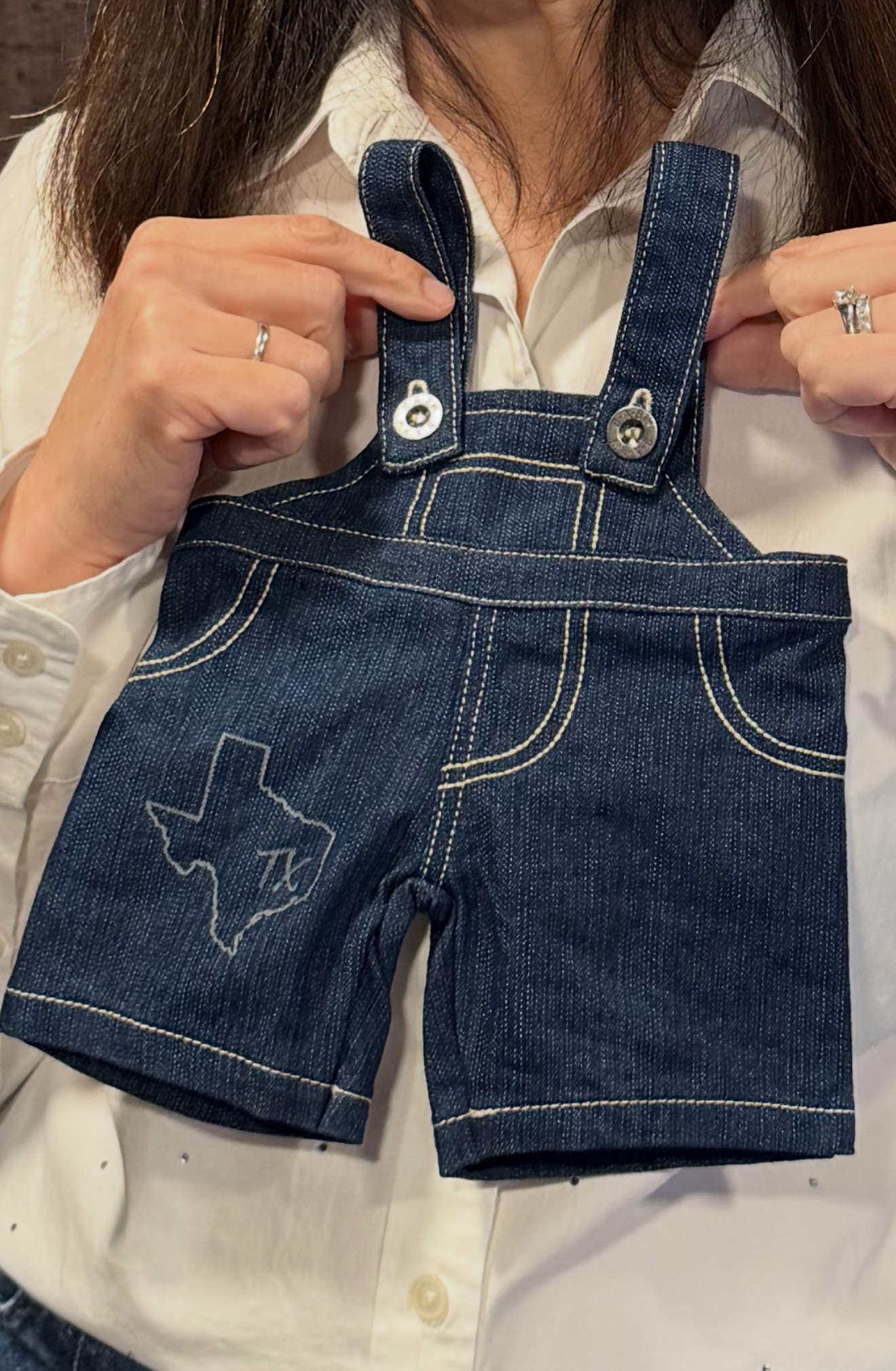
- live denim engraving
- product engraving
- beauty personalization
- luggage tag customization
- apparel customization
- live printing
- product monogramming
- limited-edition local artwork
- interactive gifting
What Do Experiential Retail Statistics Tell Marketers?
Taken together, the research points toward five important themes.
1. Physical retail is not disappearing.
Large portions of consumer shopping still take place in physical stores, and retailers continue investing in their store footprints.
2. Stores are becoming brand environments.
Retailers increasingly cite brand perception, traffic and loyalty as reasons to invest in physical stores.
3. Experience can create a reason to visit.
If a product can be purchased online, the physical store has an opportunity to offer something the ecommerce transaction cannot.
4. In-store events can become recurring programming.
Ulta Beauty's tens of thousands of annual store events demonstrate that experiences do not have to be isolated campaigns.
5. Personalization connects product and experience.
Live customization can make the merchandise itself part of the activation.
THE STORE CAN BECOME THE ACTIVATION.
And the product can become the experience.
Traditional Retail vs. Experiential Retail
| Traditional Retail | Experiential Retail |
|---|---|
| Customer observes | Customer participates |
| Product is standardized | Product may be personalized |
| Store is primarily transactional | Store can also be experiential |
| Customer receives product | Customer may watch product transform |
| Marketing brings customer to store | The store itself becomes marketing |
| Interaction ends at purchase | Experience may generate sharing and memory |
Experiential elements can complement conventional merchandising and operations rather than replace them.
What Are Examples of Experiential Retail Activations?
Direct Answer
Experiential retail activations include interactive experiences that give customers something to participate in rather than simply observe. Examples include live engraving, denim personalization, beauty customization, product printing, monogramming, customization bars, product demonstrations, workshops, artist collaborations, VIP events, launch events, seasonal experiences, interactive gifting, limited-edition local personalization and photo-to-product experiences.